 Platoon Manager
Most accountability errors do not happen at formation. They happen the afternoon a soldier leaves, and again the morning they come back.
An absence is a window, not a status
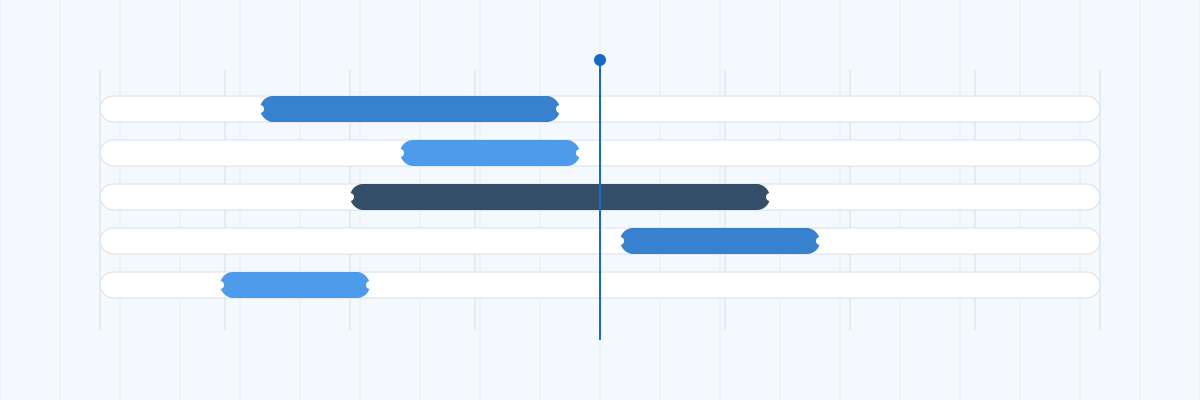
"SPC Reyes is on leave" is true for eleven days and false on the twelfth. If the roster stores it as a status, somebody has to remember to turn it off. If it stores the window, the roster turns it off by itself and Reyes is back in the count on the right morning.
This is why a DA Form 31 sitting in a folder is not accountability. The form authorizes the leave. It does not tell tomorrow's formation who should be standing there.
Record it when you sign it, not when you remember it
The gap between "the platoon sergeant approved a four-day pass" and "the roster knows about it" is where the count goes wrong. That gap is usually one weekend long.
Whoever approves the absence should record it in the same minute, with the dates. If recording it takes a laptop, a shared drive and a password, it will happen Monday, and Monday's formation will be the one that finds out.
Same-day absences still need a record
Sick call, an appointment, a late arrival with a reason. These feel too small to write down, which is why nobody does, and why the same soldier shows up as unaccounted three Tuesdays running with no way to see the pattern.
A same-day absence is a one-day window with a reason attached. It closes itself overnight. Recorded that way it costs nothing at the time and gives you a history when a first sergeant asks how often this happens.
The return is the part that gets skipped
Leaving is visible. Somebody signs something. Coming back is quiet, and a roster that needs a human to close out an absence will collect soldiers who are present at work and absent on paper.
Two rules cover it. An absence with an end date closes on that date without anyone touching it. And marking a soldier present today ends whatever absence was running, because a person standing in formation is the stronger claim.
What the history is worth
Once absences are windows with dates, the roster can answer questions nobody could answer from a status column. Who is available for a detail on the 14th. How many people the company will actually have for next month's range. Which squad has three soldiers out at school in the same week.
That is planning off the same data you were already keeping, without anyone building a second spreadsheet for it.
Related
Let the return dates do the work
Absences in Platoon Manager are date windows. A soldier drops off the count when they leave and comes back on the day they return, without anyone remembering to close it out. Put last month's leave in and watch the roster stay right by itself.